Luthier Workshop
Instruments built to tolerances
measured in tenths of a millimeter.
From conservatory procurement to orchestra fleet maintenance — a workshop conversation structured around the questions institutional buyers actually ask.
Instruments in Build
as of February 2026
Hours per Instrument
violin; cello ~480 hrs
Years in Operation
founded 1991, Cremona-trained
Institutional Partners
conservatories & orchestras
"What tonewoods do you source and from where?"
Every species is traceable to origin. Procurement directors requiring CITES documentation for import receive full chain-of-custody records with each shipment.
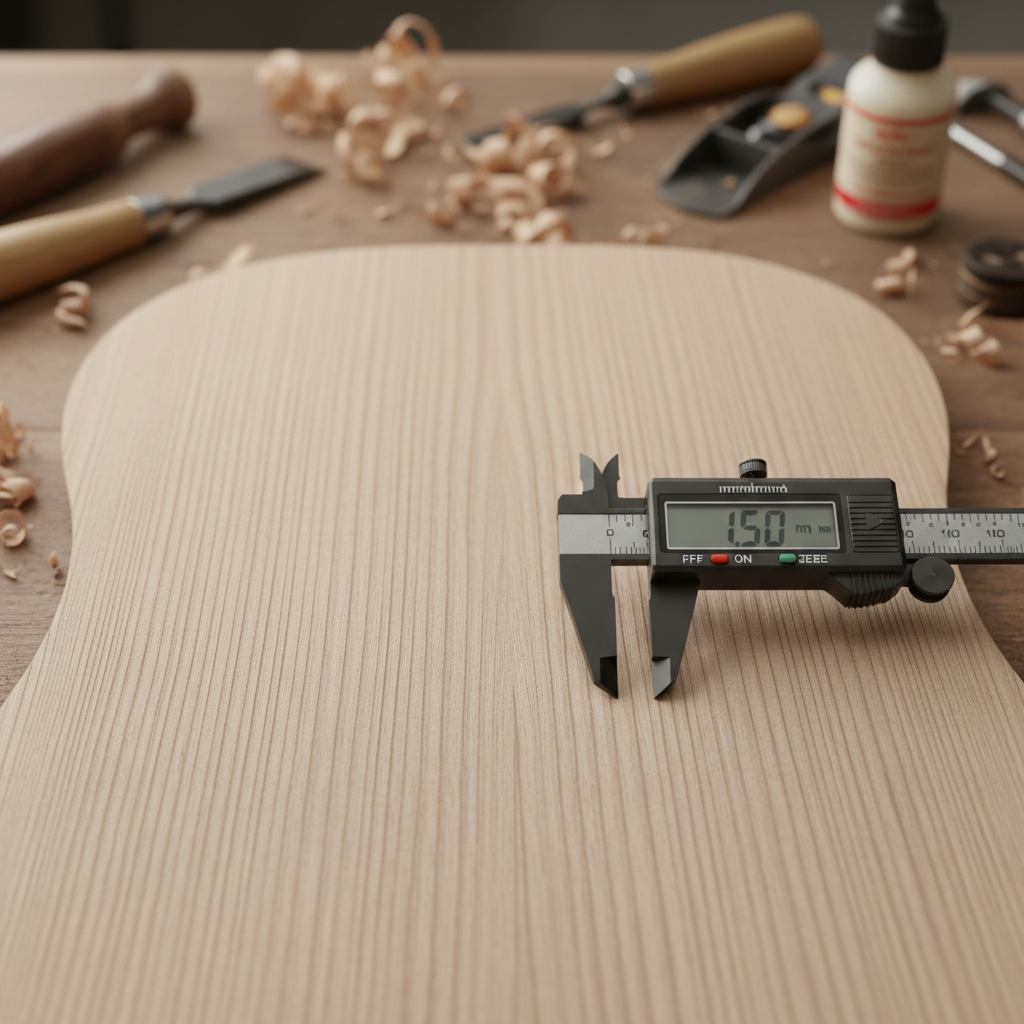
Spruce top plate — Fiemme Valley stock, 12-year air-dried. Grain width verified at 1.8mm avg.
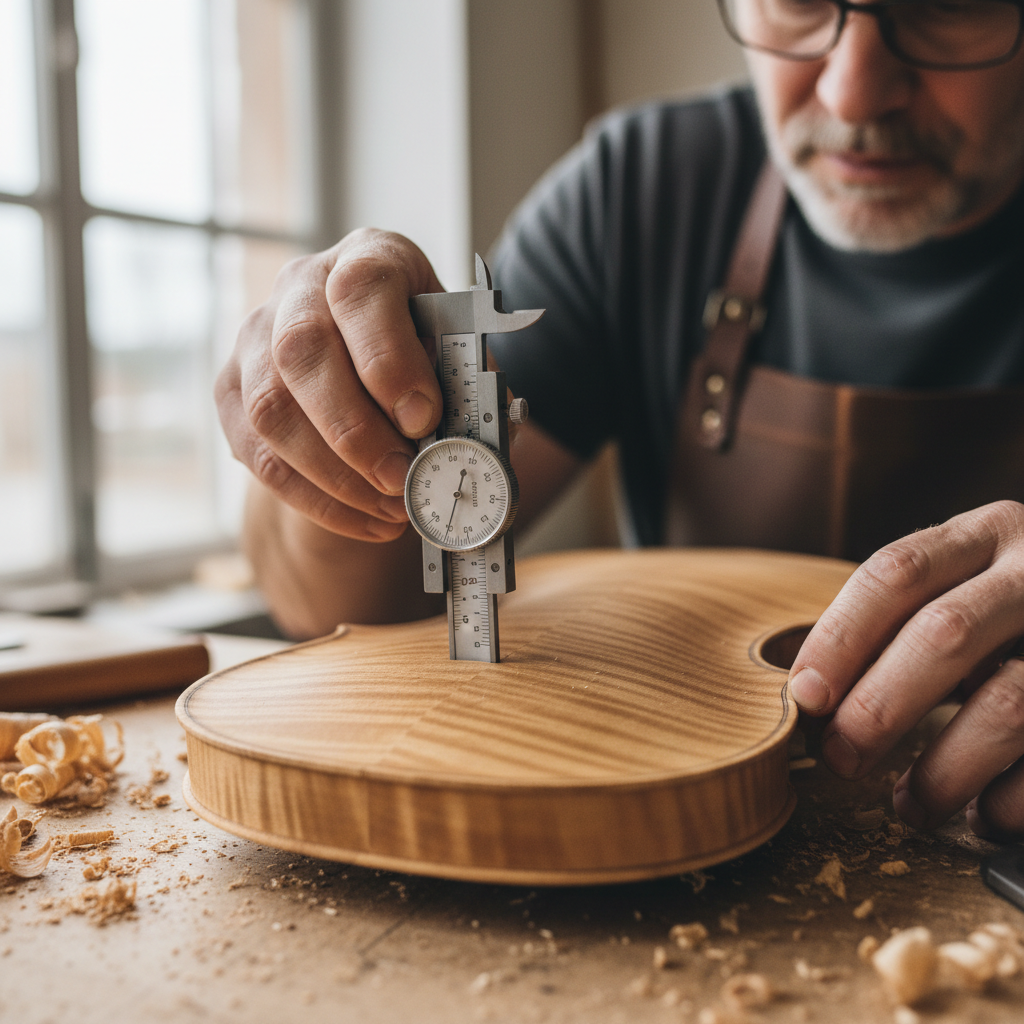
Bosnian maple back — caliper check at 17 measurement points before arching begins.
| Species | Source Region | Application | Selection Standard |
|---|---|---|---|
| European Spruce | Fiemme Valley, Italy / Bavarian Alps | Top plates | Aged 8–15 years in-workshop; selected for even grain width (1.5–2mm) and clean tap tone. Rejects rate ~60% of raw stock. |
| Bosnian Maple | Bosnia-Herzegovina, managed forests | Back, ribs, neck | Tight figure, consistent density across the billet. Each back blank is arched to ±0.1mm tolerance using a hand-scribed template. |
| Pernambuco / Brazilwood | CITES-certified Brazilian suppliers | Bow sticks (partner bows) | Full documentation provided; workshop maintains CITES compliance records for all export orders. |
| Ebony (Gabon) | FSC-certified Central African suppliers | Fingerboards, pegs, tailpieces | Density >1.1 g/cm³ verified before purchase. Alternatives in boxwood available on spec for student instruments. |
"How do you spec instruments for student durability versus solo projection?"
The short answer: the same tonewoods, different tolerances and varnish chemistry. A conservatory fleet instrument and a soloist's commission begin from the same spruce billets — the divergence happens at the graduation bench.
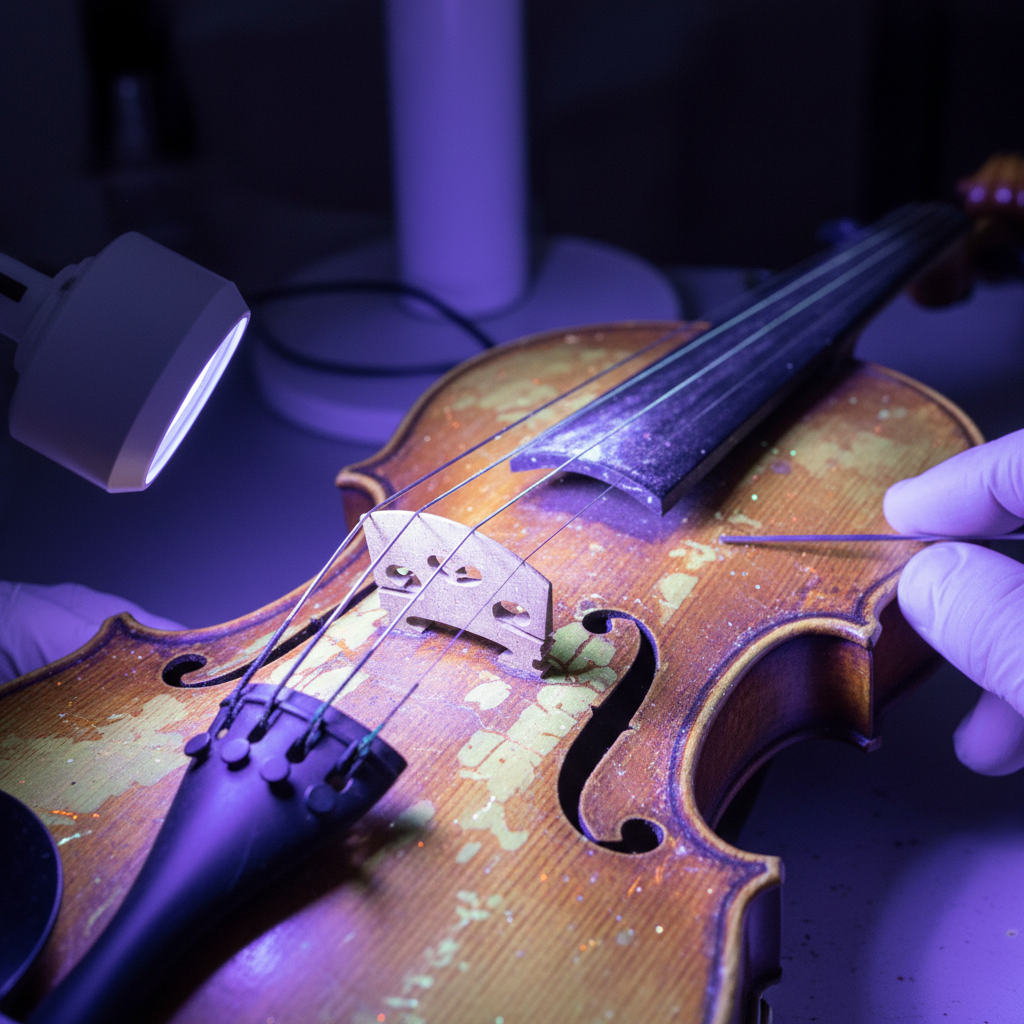
UV cabinet — oil varnish layers fluoresce distinctly from spirit varnish. Used for quality verification before delivery.
Student Fleet Spec
Optimised for dimensional stability across temperature and humidity swings common in practice rooms and touring schedules. Thicker graduation, oil-resin ground coat, UV-stabilised finish. Plays reliably for 8–10 years of intensive conservatory use before a major restoration is warranted.
Solo Projection Spec
Thinner graduation (±0.1mm tolerance), pure oil varnish for maximum acoustic transparency, tighter neck angle. Designed to carry across 2,000 seats without amplification. Requires annual setup adjustment — we recommend pairing solo instruments with a maintenance agreement.
| Criterion | Student / Fleet | Solo / Commission |
|---|---|---|
| Top Plate Thickness | 2.8–3.0mm centre, graduating to 2.2mm at edges | 2.5–2.7mm centre, graduating to 1.9mm — more responsive but fragile |
| Varnish System | Oil-resin ground + spirit varnish, 6 layers, UV-cured finish coat for durability | Oil varnish only, 8–12 hand-rubbed layers, no UV coat — maximum acoustic transparency |
| String Clearance | 3.5mm at nut, 5.5mm at heel — tolerant of seasonal movement | 3.0mm at nut, 5.0mm at heel — optimised for response, requires annual adjustment |
| Neck Angle | 84° — stable across humidity changes, easier action for developing players | 82–83° — lower projection angle for nuanced bow technique |
| Peg Material | Boxwood or rosewood — durable, self-lubricating in variable conditions | Pernambuco or select ebony — matched grain, cosmetically consistent with scroll |
| Graduation Tolerance | ±0.2mm across the plate | ±0.1mm — requires additional hand-scraping passes |
"What is your lead time for a fleet order of twelve?"
A fleet of twelve student violins: 9–11 months from specification sign-off to delivery, depending on the varnish spec. Here is exactly where that time goes.
Specification Review
Weeks 1–2Workshop call with procurement contact. Instrument family, quantity, intended player level, and any institutional requirements (labeling, case spec, bow inclusion) are documented in writing.
Wood Selection & Matching
Weeks 3–6Billets pulled from the drying room and matched by tap tone and visual grain. For fleet orders of 6+, plates are matched as a set to ensure tonal consistency across the cohort.
Carving & Graduation
Months 2–5Top and back plates carved to spec. Each plate is tap-tuned at least three times during graduation. Ribs bent, linings fitted. Bodies assembled and left to settle for 4 weeks minimum.
Varnishing
Months 5–7Ground coat applied, followed by 6–12 oil or spirit varnish layers depending on spec. Each layer cures fully before the next is applied. UV cabinet used for cure verification, not UV-curing.
Setup & Voicing
Weeks 1–3 (final)Neck fit, fingerboard planing, soundpost positioning, bridge fitting, and string height. Final voicing involves adjusting soundpost position by tenths of a millimeter while playing.
Inspection & Dispatch
Week of deliveryEach instrument photographed under raking light and UV. Measurement record, tonewood provenance sheet, and setup card accompany every delivery. Fleet orders include a numbered inventory register.
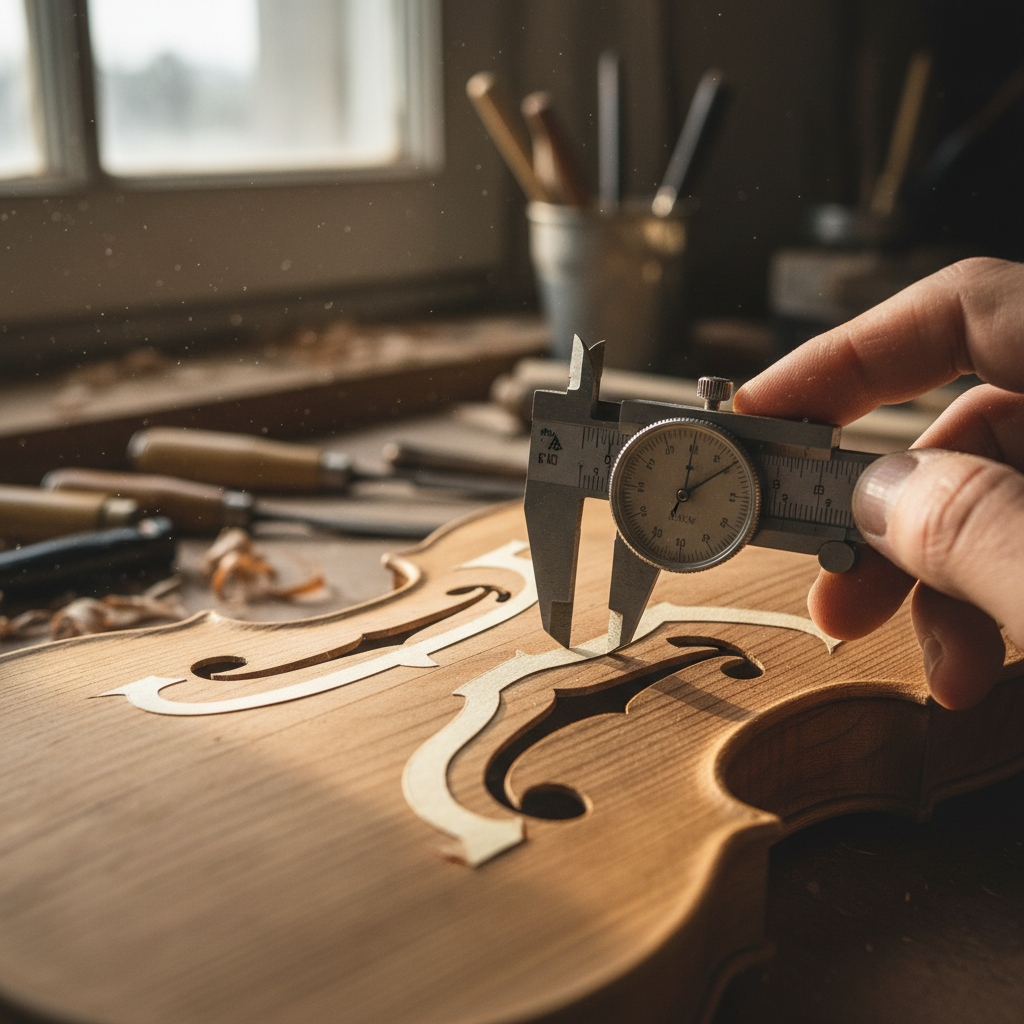
F-hole template check — position verified against the bass bar location before cutting.
Deposit schedule: 30% on specification sign-off, 40% at varnishing stage (photographed and shared), 30% on delivery. Payment terms for institutional purchase orders available on request.
47 institutions. 34 years. No compromises on craft.
From conservatory procurement offices to orchestra string sections to independent dealers — a partial record of institutions that have placed repeat orders.
We ordered a fleet of fourteen violins for our junior string program in 2022. Three years of daily conservatory use and not one has required structural repair — only routine setup adjustments. The tonal consistency across the set surprised even our faculty.
Margaret Holloway
Director of Instrumental Resources
New England Conservatory
14 violins, student fleet spec
The workshop consultation process was unlike any vendor conversation we've had. They asked about our players, not our budget. The instruments delivered were matched in weight and string height — our section players noticed immediately.
David Okafor
Orchestra Asset Manager
Toronto Symphony Orchestra
8 violas, mixed student/intermediate spec
I've been building consignment inventory with this workshop for six years. The documentation — provenance sheets, measurement records, UV photographs — makes every instrument easy to represent to a discerning buyer. The paper trail is as well-crafted as the instruments.
Siobhan Reilly
Principal, Reilly Fine Strings
Independent Dealer, Dublin
Ongoing consignment, 4–6 instruments/year
Request a Workshop Consultation
A 45-minute call with the workshop director. No sales script — we'll discuss your players, your space, and whether our instruments are the right fit.
Download Our Institutional Catalog
48 pages. Tonewood specifications, graduation diagrams, varnish chemistry notes, fleet pricing tiers, and case studies from three institutional partners.
Prefer to write first? workshop@luthier.studio — the workshop director reads every message personally.